Introduction
Bringing home a puppy is exciting, but potty accidents can quickly become frustrating. A consistent routine can make housebreaking much easier. This Puppy Potty Training Schedule: How to Housebreak in 7 Days provides a practical framework for building good bathroom habits. While every puppy learns at a different pace, seven focused days can create a strong foundation.
Successful potty training depends on timing, supervision, patience, and positive reinforcement. Puppies have small bladders and limited control, so frequent bathroom breaks are essential. Instead of punishing mistakes, focus on preventing them and rewarding the behavior you want.
For owners who want a broader approach to raising a well-mannered dog, a useful Puppy Training Pillar can provide additional guidance on training, behavior, and everyday puppy care.
Why a Puppy Potty Training Schedule Matters
A puppy does not automatically understand where you expect them to eliminate. They learn through repetition and predictable routines. A consistent Puppy Potty Training Schedule: How to Housebreak in 7 Days helps your puppy connect specific times and locations with bathroom breaks.
Young puppies often need to go shortly after waking, eating, drinking, playing, or becoming active. Taking them outside before accidents happen gives them more opportunities to succeed.
Consistency is especially important during the first week. Everyone in the household should follow the same routine. If one person allows indoor accidents while another expects outdoor potty behavior, the puppy can become confused.


A schedule also helps owners recognize patterns. After several days, you may notice that your puppy usually needs to go at predictable times. That information makes future training much easier.
Preparing Before Potty Training Begins
Before starting your seven-day plan, prepare the environment. Choose one outdoor potty location and use it consistently. The familiar smell can help your puppy understand the purpose of the area.
Keep treats near the door so rewards are immediately available. Use a leash during bathroom trips, even if you have a secure yard. Staying nearby allows you to recognize potty behavior and reward it quickly.
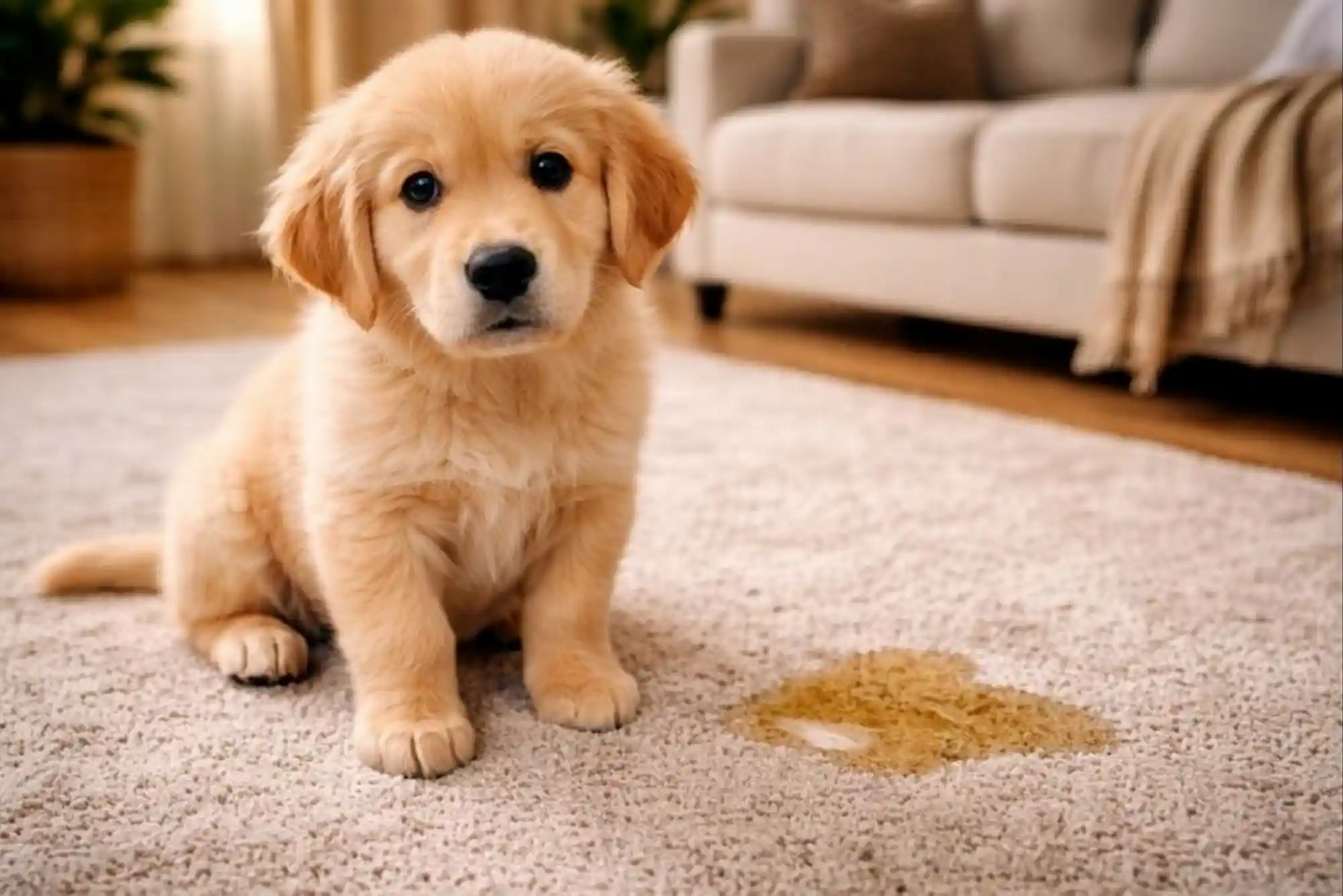
You should also clean indoor accidents thoroughly. Standard household cleaners may leave odors that your puppy can still detect. An enzymatic cleaner is often more effective for removing lingering smells.
During training, supervision is one of your strongest tools. When you cannot watch your puppy, use an appropriately sized crate or safe puppy area. The goal is to reduce opportunities for unwanted behavior.
Day 1: Establish a Consistent Routine
The first day should focus on repetition. Take your puppy outside immediately after waking. Stay in the designated potty area and give them time to eliminate.
When your puppy finishes, praise them immediately. Offer a small treat while the behavior is still fresh in their mind. This creates a positive association with going outside.
Continue bathroom trips throughout the day. Take your puppy out after meals, naps, play sessions, and drinking. Very young puppies may need breaks every 30 to 60 minutes while awake.
Keep the first day simple. Avoid giving your puppy unlimited access to the entire home. A smaller supervised area makes accidents easier to prevent.
If an accident happens, remain calm. Interrupt gently if you catch it happening and take your puppy outside. Never yell, hit, or rub their nose in the mess.
Day 2: Strengthen the Potty Habit
On the second day, continue the same routine. Puppies learn through repetition, so changing the schedule too quickly can slow progress.
Pay attention to body language. Sniffing the floor, circling, wandering away, whining, or suddenly becoming restless may indicate that your puppy needs to go.
When you notice these signals, take your puppy outside immediately. The faster you respond, the easier it becomes for your puppy to understand the connection.
Use a consistent verbal cue such as “go potty.” Say it calmly when your puppy begins eliminating. Over time, your puppy may learn to associate the phrase with the desired behavior.
Day 3: Improve Timing and Supervision
By the third day, you may begin noticing your puppy’s individual bathroom pattern. Use those observations to improve your schedule.
For example, if your puppy consistently needs to eliminate shortly after breakfast, prepare for that trip rather than waiting for an accident.
Continue supervising closely indoors. Puppies can move quickly from playing to needing the bathroom. Frequent supervision allows you to respond before an accident occurs.
You can also begin giving slightly more freedom after successful potty trips. Keep the additional space limited and supervised. If accidents increase, reduce the area again.
The key principle is simple: freedom should increase with reliability.
Day 4: Build Communication
The fourth day is a good time to encourage your puppy to communicate their needs. Some puppies naturally move toward the door, whine, or look at their owner before eliminating.
Watch for these signals and respond consistently. If your puppy approaches the door, take them outside even if it is slightly earlier than planned.
You can also teach a simple door routine. For example, have your puppy sit briefly before you open the door. This creates an orderly transition without making potty training complicated.
Keep rewarding successful outdoor elimination. Gradually, the reward can become less dependent on food while praise remains consistent.
Day 5: Reduce Preventable Accidents
At this point, your puppy may be showing noticeable improvement. However, accidents can still happen. Do not assume that five successful days mean training is complete.
Continue taking your puppy outside at predictable times. Gradually increase the interval between breaks only when your puppy consistently stays clean.
Avoid testing your puppy by waiting too long. Holding urine for extended periods can be uncomfortable and unrealistic for young puppies.
If accidents occur, consider what happened beforehand. Your puppy may have been playing, drinking more water, or left unsupervised for too long.
Each accident provides useful information. Adjust the routine rather than treating it as a failure.
Day 6: Increase Controlled Freedom
On day six, you can gradually expand your puppy’s access to the home. Only do this when previous areas have remained mostly accident-free.
Allow access to one additional room while supervising your puppy closely. Continue watching for signs that they need to go.
If your puppy successfully handles the extra space, maintain it. If accidents happen, return to a smaller area and increase supervision.
This gradual approach teaches your puppy that the same bathroom rules apply throughout the home.
For additional puppy behavior and social development resources, AKC Puppy Socialization guidance can also help owners understand how positive early experiences support confident adult dogs.
Day 7: Review and Continue the Routine
The seventh day should focus on consistency rather than ending training. A seven-day plan can establish habits, but complete housebreaking may take longer.
Review your puppy’s progress. Consider how often they need bathroom breaks, which signals they use, and when accidents are most likely.
Keep using the same potty location and verbal cue. Continue rewarding successful behavior and supervising your puppy during periods of activity.
As reliability improves, gradually increase freedom and reduce unnecessary bathroom trips. However, maintain extra breaks for young puppies because bladder control develops with age.
If your puppy still has frequent accidents after several weeks of consistent training, consider speaking with a veterinarian. Medical problems can sometimes contribute to unusual elimination patterns.
Common Potty Training Mistakes to Avoid
One of the biggest mistakes is expecting too much too quickly. Puppies are still developing physical bladder control and learning household routines.
Another mistake is punishing accidents. Punishment can make puppies afraid to eliminate around people. Instead, calmly clean the area and improve supervision.
Inconsistent timing can also create problems. If bathroom breaks happen randomly, your puppy has fewer opportunities to understand the routine.
Finally, avoid giving too much freedom too early. A puppy that has only had a few successful days may still need close supervision.
For more practical guidance on puppy behavior, training, and care, explore Chieftown and continue building positive habits with your new companion.
Frequently Asked Questions
How long does it take to potty train a puppy?
Some puppies make excellent progress within a week, while others require several weeks or months. Age, breed, previous experience, consistency, and individual temperament can affect the timeline.
How often should I take my puppy outside to potty?
Young puppies often need frequent bathroom breaks. Take them outside after waking, eating, drinking, playing, and sleeping. Very young puppies may need breaks every 30 to 60 minutes while awake.
What is the fastest way to potty train a puppy?
The fastest approach combines frequent scheduled bathroom trips, close supervision, immediate rewards, and consistent routines. Preventing accidents is more effective than punishing them afterward.
Should I wake my puppy up to pee at night?
Very young puppies may need nighttime bathroom breaks because they cannot hold their urine for long. As bladder control improves, many puppies can gradually sleep for longer periods.
What should I do if my puppy has an accident?
Stay calm and clean the area thoroughly. If you catch the puppy beginning to eliminate, gently interrupt and take them outside. Reward them if they finish outdoors.
Conclusion
A Puppy Potty Training Schedule: How to Housebreak in 7 Days can give you a clear starting point for teaching reliable bathroom habits. The most important ingredients are consistency, supervision, timing, and positive reinforcement.
Related Reading: How to Stop Puppy Biting and Mouthing Hands Immediately
Related Reading: How to Crate Train a Puppy Fast: Nighttime and Separation Anxiety Tips — full guide
Related Reading: How to Clean Dog Teeth at Home: Preventing Periodontal Disease — full guide