Introduction
Learning how to socialize a reactive dog with other dogs safely requires patience, planning, and a clear understanding of canine behavior. A reactive dog may bark, growl, lunge, freeze, or pull when another dog appears. These reactions can come from fear, frustration, excitement, or previous negative experiences.
The goal is not to force your dog to become friendly with every dog. Instead, successful socialization helps your dog remain calmer and more comfortable around other dogs. With gradual training, appropriate distance, and positive reinforcement, many reactive dogs can learn better ways to respond.
The process should always respect your dog’s emotional limits. Rushing into close interactions can increase stress and make future encounters harder. Therefore, safe socialization begins with management and progresses slowly.
What Does Dog Reactivity Mean?
Dog reactivity describes an exaggerated response to a particular trigger. Another dog may cause barking, lunging, whining, staring, pulling, or sudden attempts to escape.
Importantly, reactivity does not automatically mean aggression. A fearful dog may react because it wants another dog to move away. Similarly, a frustrated dog may bark because it desperately wants to approach.
Understanding the reason behind the reaction makes training more effective. Fear-based reactivity requires a different approach from playful excitement or frustration.


A veterinarian or qualified behavior professional can help identify possible causes. Medical problems, anxiety, poor social experiences, and environmental factors can all influence behavior.
How to Socialize a Reactive Dog with Other Dogs Safely
The safest approach begins by keeping your dog below its reaction threshold. This means maintaining enough distance that your dog can notice another dog without becoming overwhelmed.
For some dogs, that distance might be several meters. Others may need much more space. There is no universal starting distance because every dog responds differently.
When your dog notices another dog while remaining calm, immediately provide something valuable. This could be a favorite treat, toy, or brief play session.
Over time, your dog can begin associating the presence of another dog with positive experiences. This approach combines desensitization and counterconditioning, which are widely used behavior-modification techniques.
Start With Distance Instead of Direct Contact
One of the biggest mistakes owners make is assuming socialization requires direct greetings. It does not.
A reactive dog does not need to walk directly toward another dog. Instead, begin at a distance where your dog remains comfortable.
For example, imagine your dog notices another dog from across a quiet park. If your dog looks at the other dog and then accepts a treat, you have a useful training opportunity.
Reward calm observation before your dog becomes tense. Then move away if necessary.
Gradually, your dog may become comfortable at closer distances. However, reducing distance should happen only when your dog consistently remains relaxed.
This process can take weeks or months. Moving slowly is preferable to creating another overwhelming experience.
Learn Your Dog’s Early Stress Signals
Successful socialization depends heavily on reading body language. Many dogs communicate discomfort before barking or lunging begins.
Your dog may become stiff, stare intensely, turn its head away, lick its lips, yawn, raise a paw, flatten its ears, or attempt to create distance.
Other dogs may stop accepting treats or become unusually focused on the approaching dog. These changes can indicate that the situation is becoming too difficult.
Learning these early signals allows you to intervene before your dog reaches its threshold.
If you notice increasing tension, calmly increase the distance. Do not wait for barking or lunging to happen before responding.
Teach Alternative Behaviors at Home
Before practicing around other dogs, teach useful behaviors in a quiet environment. Your dog should understand these cues when there are few distractions.
Simple skills such as looking at you, touching your hand, turning away, walking beside you, and coming when called can become valuable tools.
Practice these behaviors regularly at home and during calm walks. Reward your dog generously for responding.
The goal is not to demand perfect obedience during a stressful encounter. Instead, you want your dog to have familiar behaviors that can support calm decision-making.
For example, a trained emergency turn can help you leave an approaching dog before your dog becomes overwhelmed. AKC also recommends teaching dogs practical avoidance cues rather than assuming every dog needs to greet unfamiliar dogs.
Use Positive Reinforcement Consistently
Positive reinforcement is an important part of learning how to socialize a reactive dog with other dogs safely. Reward the behavior and emotional state you want to encourage.
Suppose your dog sees another dog and remains relaxed. Mark that moment with praise or a training marker and provide a high-value reward.
The reward should matter to your individual dog. Some dogs prefer small pieces of food, while others respond better to toys, praise, or play.
Timing is equally important. Deliver the reward while your dog is still calm.
If your dog has already started barking or lunging, the situation may be too intense for effective learning. Create more distance and try again later.
Practice Parallel Walking
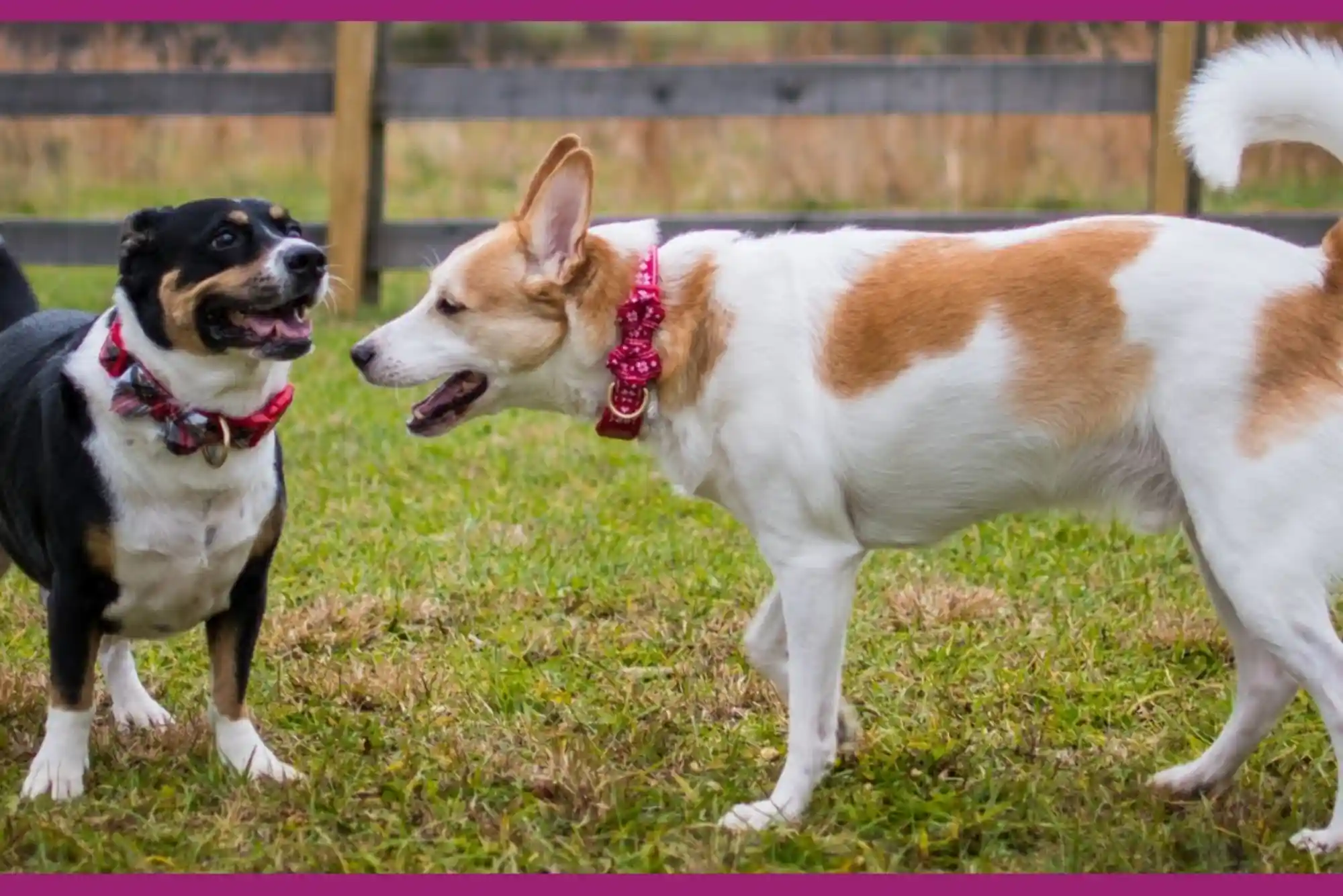
Parallel walking can provide a controlled way for two dogs to become comfortable around each other.
Instead of walking directly toward one another, two handlers walk in the same direction. Start with substantial space between the dogs.
Both dogs should have room to move without being forced together. As they become calmer, the distance can gradually decrease.
The other dog should ideally be calm and socially appropriate. Avoid using an unpredictable dog as your reactive dog’s training partner.
Parallel walking can eventually allow the dogs to share space without requiring immediate face-to-face interaction.
Avoid Forced Greetings
Forced greetings can make reactive behavior worse. A dog that feels trapped may react more strongly when another dog approaches.
Do not force your dog to sit still while another dog walks directly toward its face. Avoid holding the leash tightly while insisting that the dogs “say hello.”
Dogs also do not need to greet every dog they encounter.
A successful walk may simply involve your dog seeing another dog, remaining calm, and continuing along the route. That is valuable progress.
AKC notes that on-leash greetings are not necessary and can contribute to or worsen reactivity in some dogs.
Why Dog Parks May Not Be Suitable
Dog parks can be enjoyable for socially comfortable dogs, but they are often challenging environments for reactive dogs.
Several unfamiliar dogs may approach simultaneously. Movement can be unpredictable, and there may be limited opportunities to create distance.
A reactive dog can become overwhelmed quickly in such an environment.
Instead, controlled sessions with one calm dog are often easier to manage. A quiet outdoor space can provide better opportunities to observe body language and adjust distance.
The objective is quality interaction, not the number of dogs your pet meets.
Never Punish Barking or Growling
Barking and growling can be difficult for owners to hear, but these behaviors communicate discomfort.
Punishing the warning signal may not address the underlying emotion. In some cases, punishment around another dog can make the trigger feel even more threatening.
Instead, calmly create distance and identify what caused the reaction.
If your dog repeatedly reacts at a particular distance, increase that distance during future training sessions.
Reward calm behavior whenever possible. Behavior modification works best when the dog can learn without becoming overwhelmed.
Choose the Right Training Environment
Environment can make a major difference in your dog’s success.
A quiet street may be easier than a crowded sidewalk. A large open area may provide more escape options than a narrow path.
Choose locations where you can see approaching dogs early. This gives you time to cross the street, change direction, or increase distance.
Avoid places where dogs regularly appear unexpectedly if your dog is still learning.
Management is not failure. Preventing repeated reactions gives your dog more opportunities to practice calm behavior.
How Long Does Reactive Dog Socialization Take?
There is no fixed timeline for reactive dog socialization. Some dogs show noticeable improvement within several weeks, while others need several months.
The timeline depends on the dog’s history, emotional response, triggers, environment, and training consistency.
Desensitization should progress gradually. VCA explains that behavior modification can take hours, weeks, or months depending on the strength of the emotional response.
Progress should therefore be measured by behavior rather than the calendar.
A dog that previously reacted from 30 feet away but can now calmly watch another dog from 20 feet away has made meaningful progress.
What If Your Dog Reacts During Training?
Reactions will sometimes happen. One difficult encounter does not mean training has failed.
If your dog begins barking, lunging, or showing significant distress, calmly increase the distance.
Do not continue moving closer simply because you planned to reach a particular distance.
Allow your dog time to settle. If your dog cannot recover quickly, end the session and try again another day.
Repeatedly exposing a dog to an overwhelming trigger can increase sensitization rather than improve tolerance. VCA recommends lowering the intensity and stopping when the dog shows significant distress.
When Should You Contact a Professional?
Professional guidance is especially important when reactivity involves biting, attempted attacks, severe fear, or unpredictable behavior.
A veterinarian can also help rule out medical factors that could contribute to behavioral changes.
For stronger reactions, consider working with a qualified behavior professional experienced in reactive dogs. A veterinary behaviorist may also be appropriate.
Professional support can help you identify triggers, establish safe distances, and create a structured behavior-modification plan.
If progress has stopped or your dog’s reactions are becoming stronger, professional assistance is particularly valuable.
Frequently Asked Questions
Can a reactive dog learn to like other dogs?
Yes, some reactive dogs can become significantly more comfortable around other dogs. However, the goal does not necessarily need to be friendship.
A successful outcome may simply mean your dog can calmly see another dog without barking or lunging.
How do I socialize my reactive dog with other dogs?
Start at a comfortable distance and reward calm behavior when your dog notices another dog. Gradually decrease the distance only when your dog remains relaxed.
Avoid forced greetings and overwhelming environments. Desensitization and counterconditioning can help create more positive emotional associations.
Should I take my reactive dog to a dog park?
A dog park is not appropriate for every reactive dog. Busy environments can create unpredictable interactions and make distance difficult to control.
Controlled training with a calm dog is often easier to manage.
Can a reactive dog live with another dog?
Some reactive dogs can successfully live with another dog, but compatibility matters. Introductions should be gradual and carefully managed.
The dogs should have opportunities to separate and relax. Professional guidance can be useful when significant reactivity is involved.
How do I stop my dog from barking at other dogs?
First, determine why your dog is barking. Then increase distance from the trigger and reward calm behavior.
Desensitization and counterconditioning can help change the dog’s emotional response over time.
Conclusion
Learning how to socialize a reactive dog with other dogs safely is a gradual process built around trust, distance, and positive experiences. Your dog does not need to greet every dog or become highly social.