Introduction
Finding the right dog can be challenging when someone in the family has pet allergies. Fortunately, some breeds produce fewer allergens or shed less hair than others. While no dog is completely allergen-free, certain breeds may be easier for allergy-sensitive households to manage.
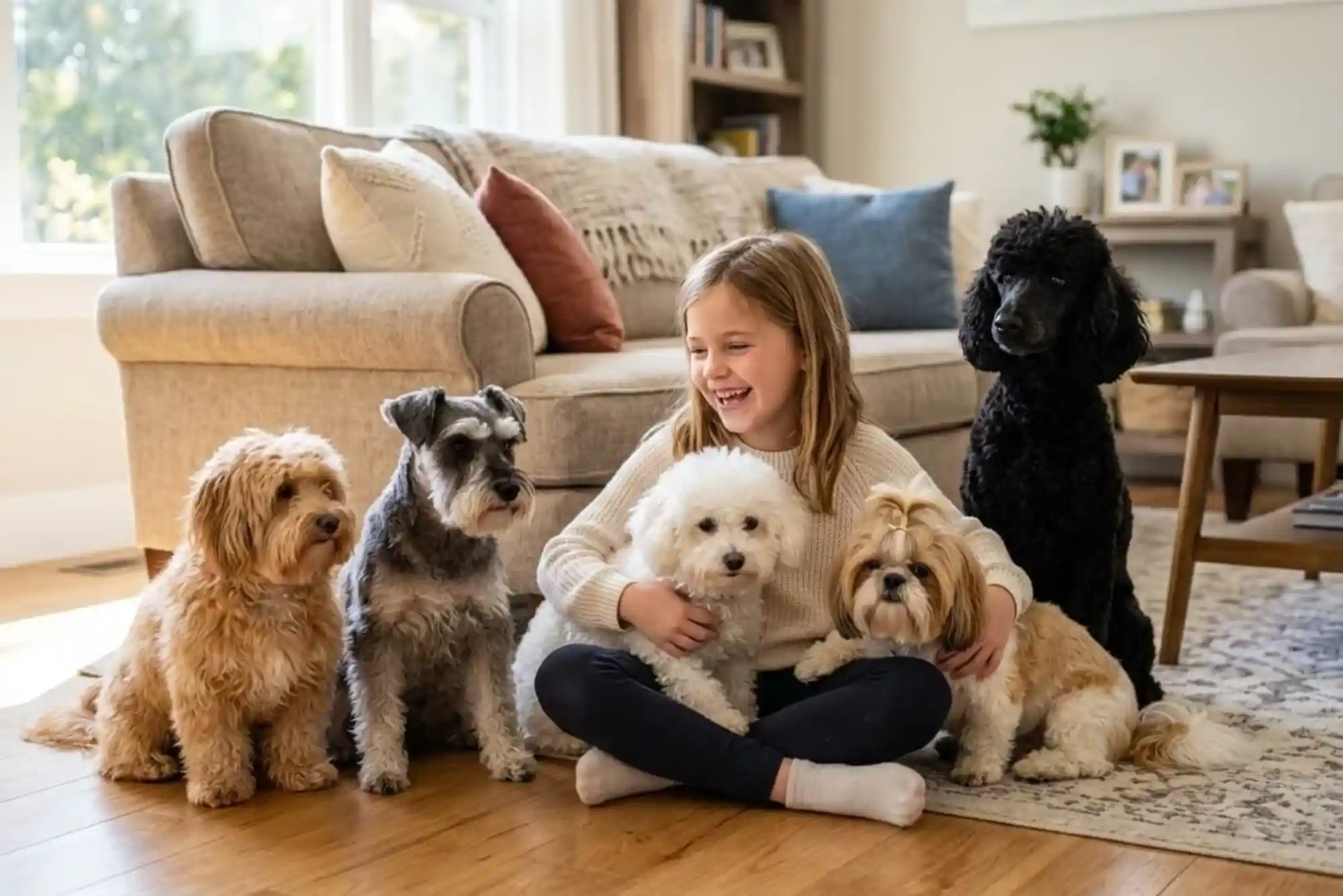
The Top 7 Hypoallergenic Dog Breeds for Families with Pet Allergies include breeds with different sizes, personalities, exercise needs, and grooming requirements. Choosing the right breed involves more than looking at coat type. Families should also consider temperament, activity levels, grooming needs, and how an individual person reacts to the dog.
Understanding these factors can help families enjoy companionship while taking practical steps to reduce allergy exposure.
What Does Hypoallergenic Mean in Dogs?
The term hypoallergenic can be misleading. It does not mean that a dog cannot cause an allergic reaction. Instead, hypoallergenic dogs are generally considered less likely to trigger allergies than many other breeds.
Dog allergies are commonly associated with proteins found in dander, saliva, urine, and skin secretions. Hair itself is not usually the main allergen. However, shedding can spread allergen-containing dander around the home.
Dogs that shed less may therefore leave fewer allergens on furniture, carpets, and clothing. Regular grooming and cleaning can further reduce exposure.


Before bringing any dog home, allergy sufferers should spend time around the specific dog. Individual reactions can vary considerably, even among dogs of the same breed.
Top 7 Hypoallergenic Dog Breeds for Families with Pet Allergies
1. Poodle
Poodles are among the most popular choices for allergy-conscious families. They have a curly coat that sheds relatively little and can be maintained with regular professional grooming.
Poodles are also highly intelligent and adaptable. Standard Poodles can suit active families, while Miniature and Toy Poodles may work better in smaller homes.
Their intelligence makes training enjoyable, although they need regular mental stimulation. Without enough activity, a bored Poodle can become restless.
Families should also remember that low shedding does not eliminate allergens. Frequent brushing, bathing, and professional grooming remain important.
2. Bichon Frise
The Bichon Frise is a small companion breed known for its soft, curly coat and cheerful personality. Its coat typically sheds very little, making it a popular option for households concerned about allergies.
Bichons can be affectionate and social with proper socialization. Their compact size can also make them suitable for apartments and smaller homes.
However, their coat requires consistent grooming. Mats can develop when brushing is neglected.
Families should also provide daily play and interaction. Bichons are companion dogs and generally enjoy spending plenty of time with their people.
3. Portuguese Water Dog
The Portuguese Water Dog is an energetic breed with a curly or wavy coat. It became especially well known among families looking for a lower-shedding dog with an active personality.
This breed can be an excellent match for households that enjoy outdoor activities. Swimming, walking, retrieving games, and training can provide useful physical and mental stimulation.
Portuguese Water Dogs are intelligent and generally respond well to consistent training. However, their energy level may be challenging for families seeking a very relaxed companion.
Regular grooming is essential because their coat continues growing and can become tangled without proper care.
4. Schnauzer
Schnauzers are available in Miniature, Standard, and Giant varieties. Their wiry coats generally shed less than those of many other breeds.
The Miniature Schnauzer can be particularly appealing to families seeking a smaller dog. It can adapt to different living environments when given adequate exercise and attention.
Schnauzers are intelligent and alert. They often enjoy training and interactive games.
Their strong personalities also mean that early socialization is valuable. Consistent boundaries can help young Schnauzers develop into confident family companions.
Regular trimming and coat maintenance are important for keeping their wiry coat healthy.
5. Soft Coated Wheaten Terrier
The Soft Coated Wheaten Terrier has a distinctive silky coat and generally sheds less than many traditional dog breeds. It can be a good option for active families.
These dogs are typically playful and energetic. They often enjoy walks, games, and activities that allow them to interact with their owners.
Their coat needs regular brushing because it can mat easily. Professional grooming may also be useful.
Wheatens can be enthusiastic dogs, so families should provide early training and socialization. Their playful nature can be wonderful for families with older children who understand respectful dog handling.
6. Lagotto Romagnolo
The Lagotto Romagnolo is an Italian breed recognized for its dense, curly coat and truffle-hunting heritage. It is another lower-shedding option that may suit allergy-conscious families.
Lagottos are intelligent and often enjoy activities that involve their sense of smell. Puzzle games, scent work, and training can keep them mentally engaged.
They are not simply low-maintenance household pets, however. Their energy and intelligence require appropriate daily stimulation.
Regular grooming helps maintain their curly coat. Families should establish a grooming routine early to prevent excessive tangling.
7. Chinese Crested
The Chinese Crested offers a different option because the breed includes hairless and coated varieties. The hairless variety has very little body hair, although it can still produce allergens through skin and saliva.
These dogs are generally small and can form strong bonds with their families. Their size can make them convenient for many indoor households.
However, hairless does not mean allergen-free. Skin care is particularly important because exposed skin needs protection from environmental conditions.
Families should also consider the dog’s sensitivity to cold and sunlight. Appropriate clothing or skin protection may sometimes be necessary.
How to Choose the Right Hypoallergenic Dog
Choosing among the Top 7 Hypoallergenic Dog Breeds for Families with Pet Allergies should involve more than coat characteristics.
First, consider the family’s lifestyle. An active household may enjoy a Portuguese Water Dog or Lagotto Romagnolo. A family looking for a smaller companion may prefer a Bichon Frise or Miniature Schnauzer.
Next, consider grooming responsibilities. Lower-shedding coats often require more maintenance rather than less. Regular brushing, bathing, trimming, and professional grooming can be necessary.
Temperament also matters. A family with young children should look for a dog whose energy and behavior fit the household.
Most importantly, allergy sufferers should spend time with the specific dog before adoption or purchase. Breed-level descriptions cannot guarantee how an individual person will react.
How to Reduce Dog Allergens at Home
Even a low-shedding dog can introduce allergens into the household. Therefore, environmental management remains important.
Regular vacuuming can help remove dander and hair from carpets and furniture. Washing bedding and washable dog items can also reduce accumulated allergens.
Keeping the dog’s sleeping area clean is useful. Some families may also choose to keep the dog out of bedrooms, particularly the bedroom of the allergy sufferer.
Grooming should ideally take place in a well-ventilated area or outside when practical. Frequent brushing can remove loose hair and dander before they spread throughout the home.
Hand washing after handling the dog can also be helpful. Families should avoid touching their eyes or face immediately after petting.
Are Hypoallergenic Dogs Completely Allergy-Free?
No. There is no dog breed that can reliably be described as completely allergy-free.
Allergen exposure can come from saliva, dander, urine, and skin proteins. Even dogs that shed very little can still produce these substances.
For this reason, people with significant allergies should speak with an appropriate healthcare professional before making a long-term pet decision.
Spending time around an individual dog is also useful. Two dogs from the same breed can produce different experiences for an allergy-sensitive person.
Are Hypoallergenic Dogs Good for Families with Children?
Many lower-shedding breeds can make wonderful family pets, but breed alone does not determine suitability.
Children should learn how to approach, touch, feed, and play with dogs safely. Adults should supervise interactions, especially with young children.
The dog’s temperament and the family’s lifestyle should also match. An energetic dog may thrive with an active family but struggle in a household that cannot provide enough exercise.
Likewise, a small dog is not automatically easier for children. Young children should learn to respect a dog’s personal space regardless of size.
How Much Grooming Do Hypoallergenic Dogs Need?
Grooming requirements vary significantly between breeds. In many cases, reduced shedding comes with increased coat maintenance.
Poodles, Bichons, Wheatens, and Lagottos can require frequent brushing and professional grooming. Regular maintenance prevents mats and keeps the coat manageable.
Families should include grooming expenses in their pet budget. They should also consider the time required for brushing and coat care.
A professional groomer can demonstrate appropriate brushing techniques. Establishing these habits early can make grooming easier for both the dog and the family.
Frequently Asked Questions
What is the best hypoallergenic dog for a family?
There is no single best breed for every family. Poodles, Bichon Frises, Schnauzers, Portuguese Water Dogs, and other low-shedding breeds can be considered. The right choice depends on allergies, lifestyle, temperament, grooming needs, and activity levels.
Which dog is 100% hypoallergenic?
No dog is completely hypoallergenic. Dogs can produce allergens through dander, saliva, and other proteins. Some breeds may produce fewer allergy-triggering exposures, but individual reactions vary.
What is the best dog for someone with severe allergies?
People with severe allergies should discuss pet ownership with a qualified healthcare professional. Spending time with an individual dog before bringing it home can also help identify possible reactions.
Can you live with a dog if you have allergies?
Some people with allergies can live comfortably with a dog after taking steps to reduce allergen exposure. Regular cleaning, grooming, hand washing, and keeping the dog away from sleeping areas may help.
Do hypoallergenic dogs shed?
Many hypoallergenic dog breeds shed less than typical breeds. However, low shedding does not mean zero shedding. Their coats may also require more frequent brushing and grooming.
Conclusion
The Top 7 Hypoallergenic Dog Breeds for Families with Pet Allergies offer several possibilities for households hoping to welcome a dog while managing allergy concerns. Poodles, Bichon Frises, Portuguese Water Dogs, Schnauzers, Soft Coated Wheaten Terriers, Lagotto Romagnolos, and Chinese Cresteds each have different characteristics.