Introduction
Bringing a new puppy home brings immense joy, endless cuddles, and unfortunately, sharp little needle teeth. If you are reading this, you are likely wondering how to stop puppy biting and mouthing hands immediately. You are not alone in this struggle. Every single puppy owner faces this exact challenge. Puppies explore the world primarily through their mouths. They do not have hands, so they use their teeth to test everything. However, letting this behavior slide can lead to severe behavioral issues later. Let us explore the proven methods to curb this habit quickly and humanely.
Understanding Why Puppies Bite and Mouth Hands
Before you can fix the problem, you must understand the root cause. Puppies bite for several distinct reasons. Teething is a major trigger for this behavior. Between three and six months of age, adult teeth push through their gums. This process causes significant discomfort and pain. Chewing and mouthing provide temporary relief to sore gums. Furthermore, puppies use their mouths to play and wrestle with littermates. When they come to your home, they treat your hands like littermate ears and tails. Boredom and excess energy also play huge roles. A tired puppy is often a well-behaved puppy. Recognizing these triggers helps you address the behavior with empathy instead of anger. Never use physical punishment. Punishment only creates fear, damages trust, and can escalate aggression. Instead, focus on redirection, clear communication, and consistent boundaries every single time your puppy engages in mouthing.
How to Stop Puppy Biting and Mouthing Hands Immediately
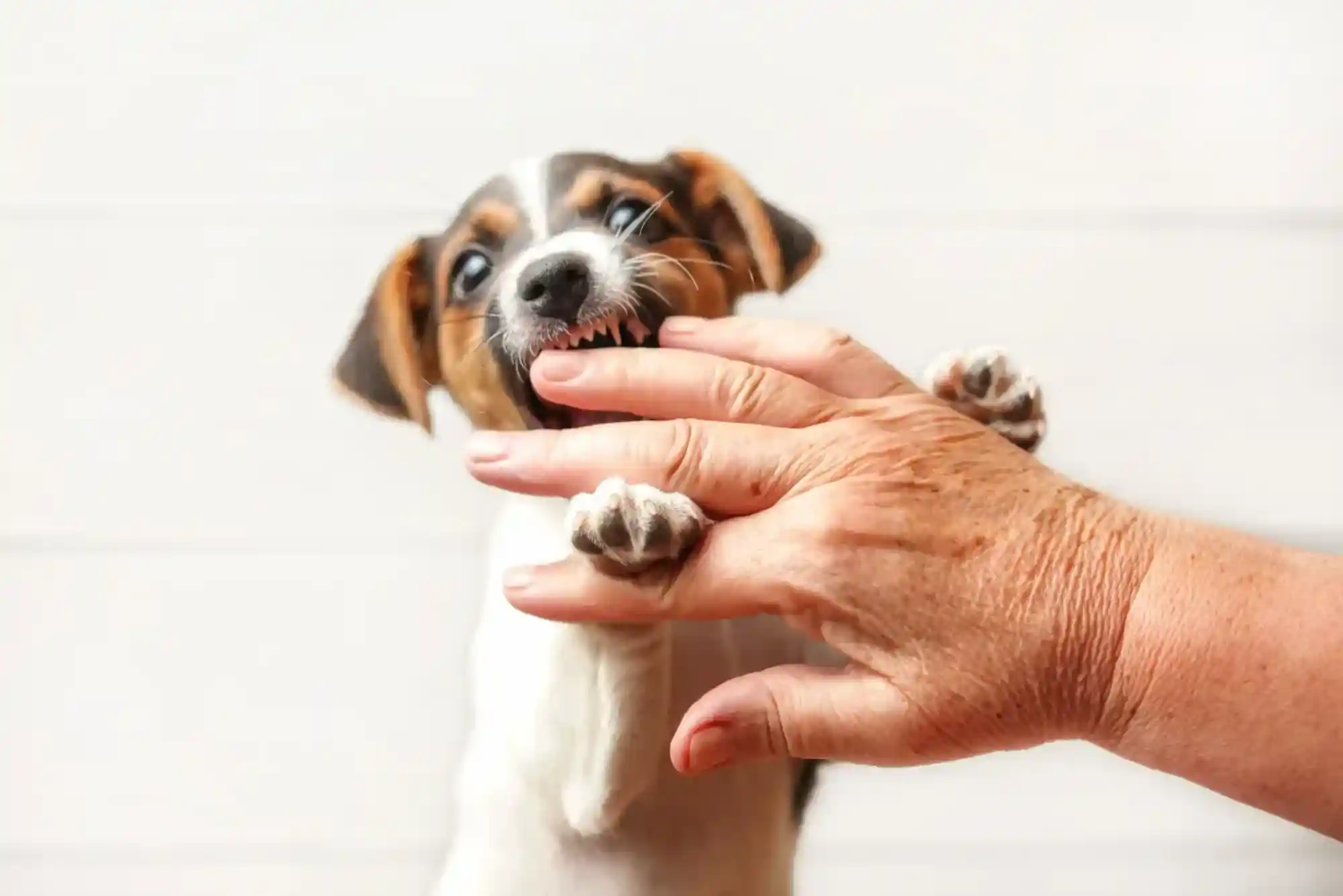
Stopping this behavior requires a proactive strategy and absolute consistency. You must teach your puppy that human skin is fragile and sensitive. When your puppy bites your hand, freeze immediately. Do not pull your hand away quickly. Pulling away mimics the erratic movement of fleeing prey. This triggers their natural predatory chase instinct and makes them bite harder. Instead, let your hand go limp inside their mouth. Make a sharp, high-pitched yelp or say “Ouch!” in a firm tone. This mimics the sound a littermate makes when a bite is too hard. Puppies instinctively understand this social feedback. Once you make the noise, let your hand go still. The puppy will usually back off out of sheer surprise. When they release your hand, praise them calmly. This teaches them that gentle behavior yields positive attention. If they continue, remove yourself from the situation entirely. Turn your back, cross your arms, and ignore them for thirty seconds. This removes the fun and teaches them that biting makes your attention vanish instantly. Consistency is the magic ingredient here. Every single family member must follow these exact steps every time. Mixed signals will only confuse the puppy and delay progress.
Redirecting to Appropriate Chew Toys
Puppies need to chew. You cannot simply stop them from biting; you must give them an acceptable alternative. Keep safe chew toys within arm’s reach in every room of your house. When you see your puppy look at your hands with mischievous intent, intercept them. Gently place a durable rubber toy or chew stick directly into their mouth. Praise them enthusiastically when they bite the toy instead of your skin. This simple swap teaches them what is legal and what is forbidden. Interactive toys like puzzle feeders also help burn mental energy. A mentally stimulated puppy has less desire to chew on human flesh. Frozen washcloths offer fantastic relief for teething puppies. The cold temperature numbs their sore gums while satisfying their urge to gnaw. Always supervise your puppy with toys to prevent choking hazards. Rotate their toys weekly to keep their interest high and prevent boredom. When a toy loses its novelty, hide it for a few weeks before bringing it back out.
Developing Canine Bite Inhibition
Natural canine bite inhibition is crucial for every dog. Puppies learn how to control their jaw pressure through interactions with their mother and littermates. If a puppy bites too hard during play, the mother or littermate yelps and stops playing. This teaches the puppy that hard biting ends the fun. You must continue this vital education in your human household. Start by allowing your puppy to mouth your hand gently. Monitor the pressure of their jaw closely. The moment the pressure crosses an acceptable threshold, make your yelp sound. Withdraw your hand and pause the play session. Gradually lower your threshold over several weeks. Eventually, even the slightest pressure should prompt a reaction. This teaches your puppy delicate jaw control. Developing strong bite inhibition ensures that even if an accident happens later in life, your dog will not break the skin. You can read more about building proper Canine Bite Inhibition techniques from trusted animal welfare organizations. Building this foundation takes patience, but the long-term safety benefits are immeasurable for everyone involved.
Implementing Time-Outs and Management Strategies
Sometimes redirection and yelping are simply not enough for an overtired or overstimulated puppy. Puppies are much like human toddlers. When they get too tired, they throw tantrums and bite more aggressively. In these moments, a structured time-out works wonders. Gently guide your puppy away from you and place them in a safe, boring area like a pen or a quiet room for one to two minutes. Do this without anger or scolding. The goal is not punishment, but rather emotional reset and calming down. Management is your best friend during this phase. Use baby gates to restrict access to high-traffic areas where you cannot supervise them constantly. Keep your hands protected by wearing heavy long-sleeve shirts or thick indoor shoes if your puppy loves targeting ankles. Setting your puppy up for success means preventing rehearsal of bad habits. Every time your puppy bites your hand successfully, the habit reinforces itself. Good management stops those rehearsal loops before they can even start.


Establishing a Routine and Comprehensive Puppy Training Pillar
A predictable daily routine reduces anxiety and minimizes erratic, bite-heavy behavior. Puppies thrive when they know what to expect next throughout their day. Schedule consistent times for feeding, potty breaks, interactive play, and mandatory crate naps. Many owners make the mistake of giving their puppy too much freedom too soon. Unsupervised freedom leads to trouble and endless hand-mouthing. Integrate structured obedience sessions into your daily schedule. Teach basic commands like “sit,” “stay,” “leave it,” and “drop it.” These commands give you verbal control over your puppy in high-excitement situations. A reliable “leave it” command is a lifesaver when your hand is headed straight into a gaping jaw. For a structured approach to raising a well-adjusted dog, follow a reliable Puppy Training Pillar. Consistent training builds a strong bridge of communication between you and your furry companion. Remember that training is a marathon, not a sprint. Celebrate small victories and remain patient during setbacks.
Frequently Asked Questions
Why does my puppy bite harder when I say no?
Saying “no” in a loud, high-pitched voice often sounds like squeaky toy noises to a puppy. This excites them further and turns your correction into a fun game. Instead of shouting, use calm body language, freeze, or use a neutral timeout method.
When should I expect puppy biting to stop?
Most puppies start improving significantly around four to six months of age as their adult teeth settle in. However, the exact timeline depends heavily on your consistency, breed tendencies, and proper training reinforcement.
Can I use bitter sprays on my hands?
Yes, you can use pet-safe, non-toxic bitter apple spray on your hands and wrists. The horrible taste discourages them instantly from mouthing your skin. However, bitter sprays are a management tool, not a complete training solution by themselves.
What is the fastest way to stop mouthing?
The absolute fastest way is combining an immediate freeze response with a sharp yelp and instant removal of attention. Consistency across all family members makes this method work remarkably fast. For more expert guides and resources, visit Chieftown to help you navigate every stage of canine ownership successfully.
Conclusion
Stopping puppy biting requires patience, consistency, and a clear understanding of canine behavior. It is a normal developmental phase that every owner must navigate. By staying calm, redirecting energy to appropriate toys, and removing attention when boundaries are crossed, you will see rapid improvements. Do not get discouraged by temporary setbacks on your journey. Stay committed to your training routine every single day. Take the first step today by implementing these strategies with your puppy. Share your own puppy training tips in the comments below or reach out to our community for extra support!
Related Reading: Puppy Potty Training Schedule: How to Housebreak in 7 Days
Related Reading: Labrador Retriever Exercise Requirements by Age (Puppy to Senior) — full guide