Introduction
Crate training can make life easier for both puppies and their owners. However, many new owners wonder how to crate train a puppy fast without causing fear or stress. The answer is not forcing a puppy into a crate. Instead, successful crate training depends on positive experiences, consistency, patience, and a predictable routine. When introduced correctly, a crate can become a comfortable resting space rather than a place of punishment.
Nighttime can be especially challenging during the first few days. Puppies may cry, bark, scratch, or struggle to settle when they cannot see their owners. Separation anxiety can make this behavior more intense. Therefore, your approach should focus on helping your puppy feel safe while gradually building independence. This guide explains practical ways to make crate training faster, calmer, and more effective.
Understanding How to Crate Train a Puppy Fast
Learning how to crate train a puppy fast starts with understanding what the crate represents. A puppy should associate the crate with comfort, rest, treats, toys, and positive attention. It should never become a place where your puppy is regularly punished for unwanted behavior.
The crate should also be appropriately sized. Your puppy needs enough room to stand, turn around, lie down, and stretch comfortably. However, excessive space can make house training more difficult. A crate divider can help you adjust the available space as your puppy grows.
Place the crate somewhere your puppy can still feel connected to the household. During the day, a family area often works well. At night, moving the crate closer to your bedroom can provide reassurance during the early stages.
Creating Positive Crate Associations
Positive association is one of the most important principles when learning how to crate train a puppy fast. Start by leaving the crate door open and allowing your puppy to investigate naturally. Avoid pushing or dragging your puppy inside.


You can place treats near the entrance and gradually move them farther inside. Soft bedding may make the crate more inviting, although some puppies prefer a simple surface. Observe what your puppy finds comfortable.
Meals can also become part of crate training. Place your puppy’s food bowl near the entrance at first. Once your puppy becomes comfortable, move it farther inside. This creates a strong connection between the crate and something enjoyable.
Short sessions are usually more productive than long sessions. Close the door for only a few seconds at first. Open it while your puppy remains calm. Gradually increase the duration as confidence improves.
How to Crate Train a Puppy Fast During the Day
Daytime practice gives your puppy the foundation needed for successful nighttime crating. Start with several short sessions throughout the day. Encourage your puppy to enter the crate voluntarily and reward calm behavior.
Once your puppy can remain inside comfortably, take a few steps away. Return before your puppy becomes distressed. Over time, increase the distance and duration. This gradual process teaches your puppy that your temporary absence is safe.
Avoid making departures and returns overly dramatic. Calm behavior from you can help keep the situation predictable. Your puppy learns that entering the crate does not mean something frightening is about to happen.
Training should also happen when your puppy is naturally tired. After play, exercise, or a bathroom break, many puppies are more willing to settle. This can make early crate sessions considerably easier.
For additional puppy-training guidance, explore the Puppy Training Pillar for broader advice on building good habits beyond crate training.
How to Handle Nighttime Crate Training
Nighttime is often the biggest test for new puppy owners. A young puppy may cry because the environment is unfamiliar or because they need to eliminate. Therefore, it is important to consider the reason behind the behavior instead of automatically ignoring it.
Before bedtime, give your puppy an opportunity to use the bathroom. Keep the final routine calm and predictable. Avoid exciting games immediately before placing your puppy inside the crate.
Young puppies may not be able to hold their bladder throughout the night. If your puppy wakes and genuinely needs to go outside, take them out quietly. Keep the bathroom trip boring and brief. Then return directly to the crate.
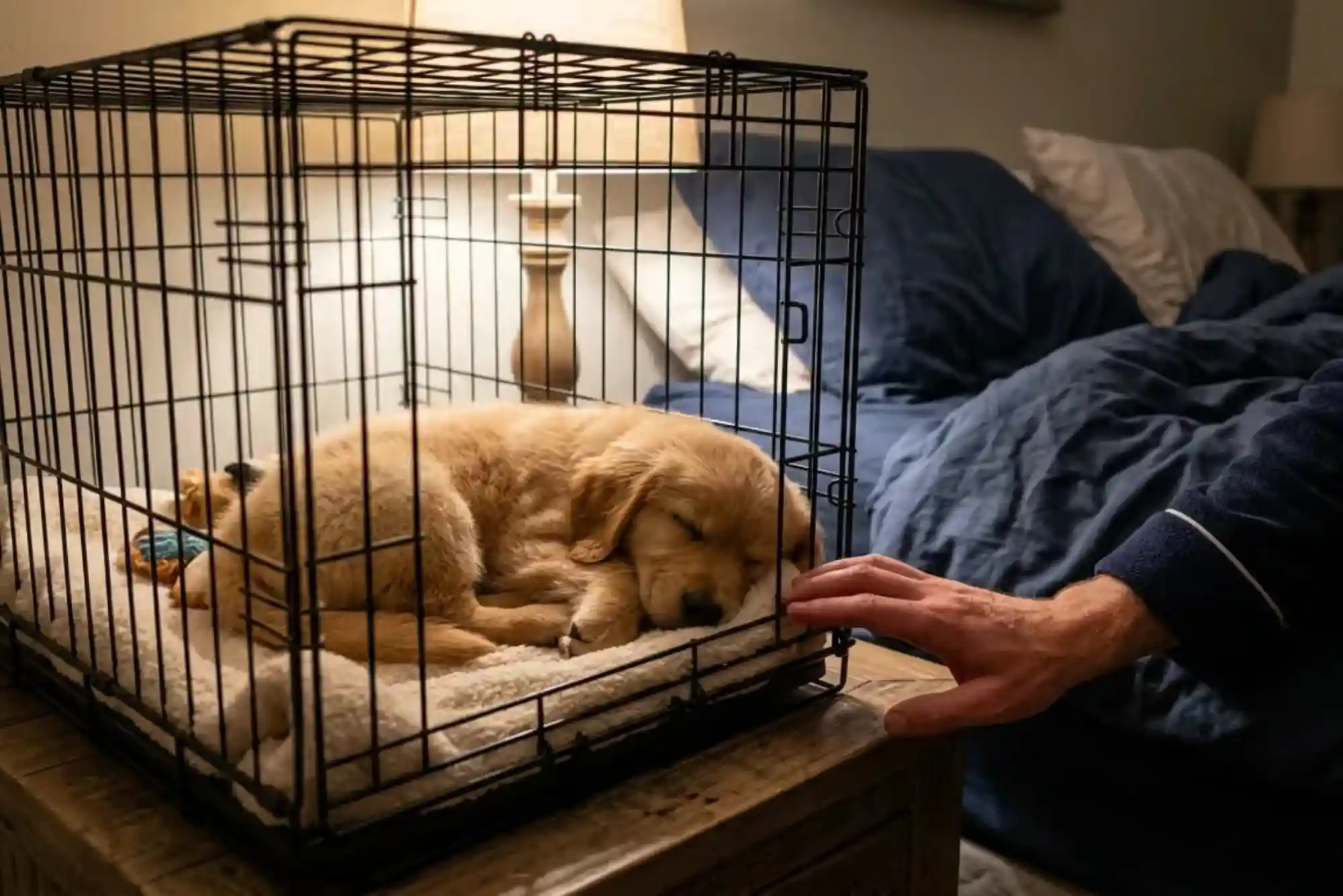
Keeping the crate close to your bed can also help during the first nights. Your presence may reassure your puppy without requiring constant interaction. As your puppy becomes comfortable, you can gradually move the crate to its permanent location.
What to Do When a Puppy Cries in the Crate
Puppy crying can be difficult to hear, especially during the night. However, responding appropriately requires understanding the difference between normal protest and genuine distress.
First, check whether your puppy needs to eliminate. Also consider hunger, discomfort, temperature, illness, or an overly long confinement period. If those needs are addressed, avoid teaching your puppy that prolonged barking always results in immediate freedom.
Instead, wait for a brief moment of calm when possible. Then provide quiet reassurance. Over time, your puppy learns that calm behavior receives attention.
Never use the crate as punishment for barking or accidents. This can damage the positive association you are trying to build. Effective crate training should make the puppy feel secure rather than trapped.
Crate Training and Separation Anxiety
Separation anxiety requires special care. A puppy that becomes distressed whenever you leave may need a slower training process. Learning how to crate train a puppy fast does not mean rushing through signs of serious fear.
Begin with very short absences. Step away for a few seconds and return while your puppy remains relaxed. Gradually extend the duration. If your puppy starts showing significant distress, reduce the difficulty.
You should also practice independence outside the crate. Encourage your puppy to relax on a bed while you move around the room. This helps your puppy understand that being away from you does not mean being abandoned.
Keep departures and arrivals low-key. Excessive emotional greetings can make your absence feel more significant. A calm household routine can support your puppy’s developing independence.
For broader information about responsible pet care, visit Chieftown, where you can find additional puppy and dog-related guidance.
Making the Crate Comfortable and Safe
Comfort can have a major influence on how quickly a puppy accepts a crate. Choose a quiet location with appropriate ventilation and a comfortable temperature. The crate should never be placed somewhere dangerously hot or cold.
A safe chew toy can provide mental stimulation during appropriate crate sessions. However, avoid leaving anything inside that could easily break apart or become a choking hazard.
Some puppies settle better with a light blanket covering part of the crate. Others prefer an unobstructed view. Experiment carefully and watch your puppy’s behavior.
The crate should also remain a positive space throughout the dog’s life. Even after your puppy is fully trained, allow them to use it voluntarily for naps and quiet time.
Common Crate Training Mistakes
One common mistake is expecting overnight results. Puppies are learning bladder control, household routines, and emotional independence at the same time. Progress can therefore vary between individual dogs.
Another mistake is using the crate for excessive periods. A crate is a management and resting tool, not a substitute for exercise, interaction, training, and exploration.
Inconsistent rules can also slow progress. If your puppy sometimes receives attention for barking and sometimes does not, the behavior can become harder to predict. Establish a consistent routine that everyone in the household follows.
Forcing a frightened puppy into the crate is another serious mistake. Instead, return to easier exercises and rebuild positive associations.
Following Humane Crate Protocols
Humane crate training should always prioritize the puppy’s physical and emotional welfare. The goal is to teach comfort and confidence rather than simply achieving obedience.
The Humane Crate Protocols provides broader animal welfare information that can help owners understand responsible approaches to pet care and training. Using humane methods is especially important when dealing with puppies that show fear or separation-related distress.
If your puppy consistently displays intense panic, attempts to injure themselves, or cannot settle despite gradual training, professional guidance may be appropriate. A qualified veterinarian or positive-reinforcement trainer can help identify the underlying problem.
Building a Consistent Puppy Routine
A predictable daily routine can make crate training significantly easier. Puppies generally benefit from regular sleeping, eating, playing, training, and bathroom opportunities.
Try to connect crate sessions with naturally calm periods. After exercise and a bathroom break, your puppy may be ready for quiet rest. This can reduce resistance and encourage relaxation.
Consistency matters more than perfection. A puppy may have an accident or cry unexpectedly. One difficult night does not mean the training has failed. Return to the routine and adjust the duration when necessary.
As your puppy becomes more confident, gradually increase crate time. Always balance crate use with exercise, social interaction, training, and free movement.
How Long Does Crate Training Take?
There is no universal timeline for crate training. Some puppies become comfortable within several days, while others require several weeks. Age, temperament, previous experiences, routine, and individual confidence can all influence progress.
The phrase “fast” should therefore mean efficient and positive rather than rushed. Pushing a puppy beyond its comfort level can create setbacks and make training take longer.
Look for small signs of progress. Your puppy may begin entering the crate voluntarily, settling faster, sleeping inside, or remaining calm when you step away. These behaviors show that the crate is becoming a safe place.
Frequently Asked Questions
Is it OK to let a puppy cry in a crate at night?
Brief protest can occur during normal adjustment. However, prolonged or intense distress should not simply be ignored. Check bathroom needs, comfort, health, and the length of confinement. Gradual training is usually more effective than allowing severe distress.
How do I get my puppy to stop crying in the crate?
Make sure your puppy has exercised, eaten appropriately, and used the bathroom. Keep the crate comfortable and practice short daytime sessions. Reward calm behavior and gradually increase crate duration.
Should I ignore my puppy crying at night?
Not automatically. First determine whether your puppy needs the bathroom or has another genuine need. If those needs are satisfied, respond calmly rather than creating an exciting interaction.
How long can a puppy stay in a crate?
The appropriate duration depends on the puppy’s age, bladder control, individual needs, and daily routine. Young puppies generally require frequent bathroom opportunities and should not spend excessive periods confined.
Can crate training help separation anxiety?
A crate can support independence training, but it does not automatically solve separation anxiety. Puppies showing serious distress need gradual absences and may benefit from professional behavioral guidance.
Conclusion
Learning how to crate train a puppy fast is about creating trust rather than rushing the process. A comfortable crate, predictable routine, positive reinforcement, and gradual separation can help your puppy settle confidently.
Related Reading: How to Stop Puppy Biting and Mouthing Hands Immediately — full guide
Related Reading: Best Health Guest Posting Tips for Pakistan Marketers
Related Reading: Secret Tips for Solution Percentage Calculator