Introduction
A dog ear infection can start with something that seems minor: a little extra scratching, occasional head shaking, or an unusual smell. Within days, however, inflammation and discharge can become painful. Understanding the signs of a dog ear infection helps owners respond early instead of waiting until the problem becomes severe.
The two common microbial causes are yeast and bacteria, although allergies, parasites, foreign objects, moisture, and other underlying conditions can also contribute. Importantly, you cannot reliably determine the exact cause from discharge color or smell alone. Veterinarians commonly use an otoscope and examine ear material under a microscope to identify yeast, bacteria, parasites, or other problems.
Home cleaning can be useful for routine ear care or as part of a veterinarian-directed treatment plan. However, cleaning an already painful or inflamed ear with the wrong product can make irritation worse. This guide explains what to look for, how yeast and bacterial infections differ, and how to approach ear cleaning safely.
What Does a Dog Ear Infection Look Like?
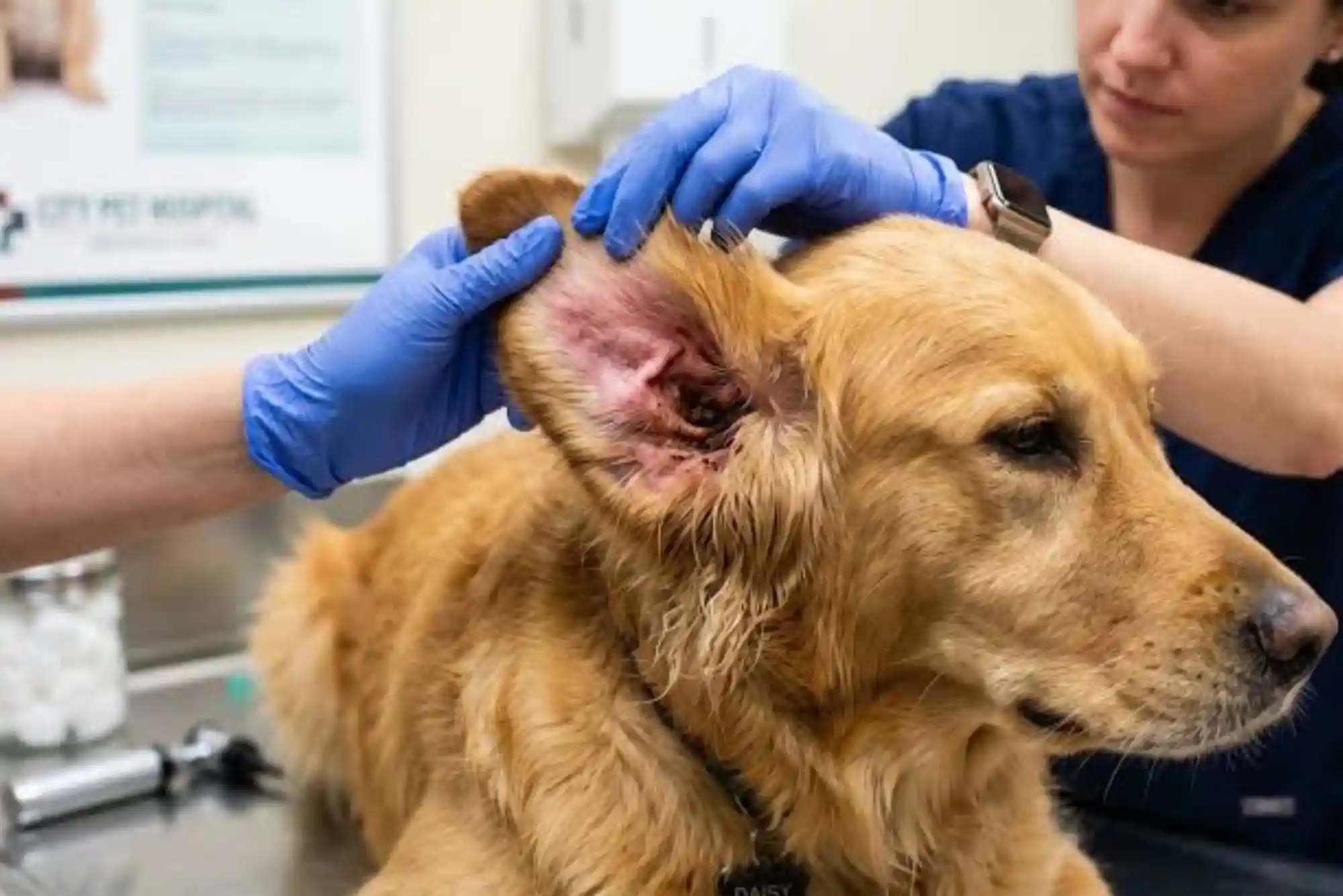
The medical term for inflammation or infection of the outer ear canal is otitis externa. It is common in dogs and can affect one or both ears. Typical signs include head shaking, scratching, redness, swelling, unpleasant odor, pain, and abnormal discharge.
Your dog may also rub the affected ear against furniture or the floor. Some dogs become reluctant to have their head or ears touched because the inflamed canal is sensitive.
A healthy ear generally should not have a strong odor, significant discharge, or obvious inflammation. Changes from your dog’s normal ear appearance are worth monitoring.


The important point is that these symptoms do not automatically tell you whether the problem is yeast or bacterial. Both can cause similar signs, and mixed infections can occur.
Common Signs of a Dog Ear Infection
Frequent Head Shaking
Repeated head shaking is one of the easiest signs to notice. Dogs may shake because the ear feels itchy, painful, or full of fluid and debris.
Occasional shaking is normal, particularly after bathing. Persistent shaking, especially when accompanied by scratching or odor, deserves attention.
Scratching or Rubbing the Ear
A dog with an irritated ear may repeatedly scratch with a hind leg. Some dogs also rub their ear against carpets, furniture, or the ground.
Excessive scratching can damage the skin around the ear and create additional inflammation.
Redness and Swelling
An inflamed ear canal may appear red or swollen. The inside of the ear flap can also become irritated.
Severe swelling can narrow the ear canal and make it increasingly difficult for medication or cleaning solutions to reach affected areas. Chronic inflammation may eventually cause permanent structural changes.
Unpleasant Odor
A strong or unusual odor is another common warning sign. Yeast may produce a distinctive musty or yeasty smell, while bacterial infections can produce a particularly unpleasant odor.
However, odor alone cannot establish the diagnosis. A veterinarian may need to examine a sample of the ear discharge.
Discharge or Excess Wax
You may notice brown, black, yellow, cream-colored, or otherwise abnormal material. The appearance can provide clues, but it is not a reliable way to distinguish yeast from bacteria.
Dark discharge, for example, can occur with yeast, parasites, bacterial infection, or mixed infections.
Pain or Sensitivity
A dog with an infected ear may pull away when you touch the ear flap or the area around the canal. Some dogs may whine or become unusually irritable.
Pain is particularly important because aggressive cleaning can worsen an already inflamed ear.
Yeast vs Bacterial Dog Ear Infection: What’s the Difference?
Yeast and bacteria behave differently, but their symptoms overlap considerably. That is why a veterinary examination is more dependable than trying to diagnose the infection based only on what you see.
Signs Commonly Associated With Yeast
The yeast most commonly associated with canine otitis is Malassezia. Small numbers can normally live in the ear, but changes in the ear environment can allow yeast to multiply excessively.
A yeast-associated infection may involve dark, waxy or greasy debris, redness, itching, and a strong musty or yeasty odor.
Dogs with allergies can be particularly prone to recurrent ear inflammation, which can create an environment where yeast overgrowth develops.
Still, dark brown discharge does not prove that yeast is responsible. A microscopic examination is more useful for identifying the organism involved.
Signs Commonly Associated With Bacteria
Bacterial infections can cause significant redness, swelling, pain, odor, and discharge. Some bacterial infections produce yellowish or pus-like material, although appearance varies.
Certain bacteria, including Pseudomonas, can be difficult to manage and may be associated with chronic, painful infections. Veterinary testing can help identify the organisms and guide treatment when necessary.
Bacterial and yeast infections can also occur together. Therefore, assuming that every smelly or dark ear is a yeast infection can lead to inappropriate treatment.
Why You Shouldn’t Diagnose a Dog Ear Infection by Color Alone
It is tempting to look at discharge and decide, “This looks like yeast” or “This must be bacteria.” Unfortunately, ear discharge is not that straightforward.
A veterinarian can collect a sample and examine it under a microscope. Cytology can reveal yeast, bacteria, inflammatory cells, and other findings. An otoscope also allows the veterinarian to inspect the ear canal and, when possible, the eardrum.
This matters because treatment differs according to the cause. Yeast generally requires antifungal treatment, while bacterial infections may require an appropriate antibacterial medication. Underlying allergies, parasites, foreign bodies, or other causes may also need attention.
Treating only the visible discharge without addressing the underlying problem can allow the infection to return.
Can You Clean a Dog Ear Infection at Home?
This depends on the condition of the ear and your veterinarian’s instructions.
Routine ear cleaning can be appropriate for some dogs, particularly those prone to wax accumulation or recurrent ear problems. But an actively infected, painful, swollen, or damaged ear should not be aggressively cleaned without veterinary guidance.
Merck Veterinary Manual recommends following a veterinarian’s cleaning instructions and avoiding anything that pushes debris deeper into the canal. Cotton swabs should not be inserted into the ear canal.
A veterinarian can also determine whether the eardrum is intact. This is important because some ear medications and cleaning products may be unsafe when the eardrum is damaged.
How to Clean Your Dog’s Ears Safely
When your veterinarian has confirmed that home cleaning is appropriate, use a veterinary-recommended ear-cleaning solution.
Start by making sure your dog is calm. Lift the ear flap gently so you can access the opening of the canal. Apply the recommended amount of cleaner without forcing the bottle tip deep into the ear.
Gently massage the base of the ear for about 30 seconds. This helps the solution loosen debris within the canal. Your dog may naturally shake its head afterward, helping bring loosened material toward the opening.
Use a clean cotton ball to wipe away the material that reaches the visible part of the ear. Never push a cotton swab down into the canal.
If your dog shows significant pain, stop rather than forcing the procedure.
The exact cleaning frequency depends on the dog’s condition. Some dogs need temporary frequent cleaning during treatment, while maintenance may later decrease to once or twice weekly or another schedule recommended by the veterinarian.
What Not to Use for a Dog Ear Infection
One of the most common mistakes is reaching for household ingredients because they seem convenient.
Avoid experimenting with vinegar mixtures, alcohol, hydrogen peroxide, or other irritating substances unless your veterinarian specifically recommends a particular product. Merck Veterinary Manual specifically warns that irritating home remedies, including vinegar dilutions, can worsen inflammation and secretions.
VCA also notes that hydrogen peroxide or alcohol-containing cleaners can irritate an inflamed or ulcerated ear canal.
Do not use leftover human ear medication or another pet’s prescription medication either. The appropriate treatment depends on what is causing the problem and whether the eardrum is intact.
When a Dog Ear Infection Needs a Vet
A veterinary examination is especially important when your dog has significant pain, swelling, heavy discharge, persistent odor, repeated infections, or symptoms that are not improving.
You should also seek prompt veterinary care if your dog develops a head tilt, balance problems, unusual eye movements, facial weakness, or difficulty hearing. These signs can indicate involvement beyond the outer ear. Middle and inner ear disease can cause neurological and balance-related symptoms and requires proper evaluation.
Recurring infections deserve attention even when symptoms temporarily improve. Allergies and other underlying conditions can contribute to repeated episodes, so simply treating each flare-up may not solve the underlying problem.
How to Help Prevent Future Ear Infections
Prevention starts with understanding your dog’s individual risk factors.
Keep the ears appropriately dry after swimming or bathing, and check them regularly for changes in odor, redness, moisture, or discharge. Dogs with recurring ear problems may need a veterinarian-designed maintenance cleaning routine.
Avoid excessive cleaning as well. Overcleaning can irritate the ear canal and contribute to inflammation.
If your dog repeatedly develops ear infections, ask your veterinarian whether allergies, ear anatomy, parasites, moisture, or another underlying issue could be contributing.
Take Dog Ear Infection Signs Seriously
Recognizing the early signs of a dog ear infection can save your dog considerable discomfort. Head shaking, scratching, redness, unusual odor, discharge, and pain are all reasons to pay closer attention.
Although yeast infections are often associated with dark waxy debris and a musty odor, while bacterial infections may produce more painful inflammation and abnormal discharge, these clues are not enough to make a reliable diagnosis. Yeast and bacteria can occur together, and allergies or other underlying conditions may be driving the problem.
For routine care, use a veterinarian-approved ear cleaner, avoid inserting cotton swabs into the canal, and keep the ears appropriately dry. If the ear is painful, swollen, producing significant discharge, or showing persistent symptoms, arrange a veterinary examination rather than relying on home remedies.
FAQs
What does a bacterial ear infection in a dog look like?
A bacterial ear infection may cause redness, swelling, pain, unpleasant odor, head shaking, scratching, and abnormal discharge. Yellowish or pus-like discharge can occur, but appearance alone cannot confirm a bacterial infection. Veterinary cytology can help identify the organisms involved.
What does a yeast infection in a dog’s ear look like?
Yeast-associated ear infections commonly involve itching, redness, odor, and dark or waxy debris. However, these signs can overlap with other ear problems. Microscopic examination is a more reliable way to determine whether yeast is present in excessive numbers.
Can I clean my dog’s ears at home if they have an infection?
Sometimes, but only when your veterinarian has determined that home cleaning is appropriate and has recommended the right product and technique. Painful or severely inflamed ears may require professional cleaning and treatment first.
Can I use hydrogen peroxide to clean my dog’s ears?
Hydrogen peroxide is generally not recommended for routine cleaning, particularly when the ear is inflamed. It can irritate sensitive ear tissue. A veterinarian can recommend an appropriate canine ear-cleaning solution instead.
How often should I clean my dog’s ears?
There is no single schedule that works for every dog. Some dogs need regular maintenance cleaning, while others rarely need it. Dogs with chronic ear problems may have a veterinarian-directed schedule that starts more frequently and decreases as the ears improve.
Will a dog ear infection go away on its own?
An apparent improvement does not necessarily mean the underlying infection has been resolved. Because ear infections can involve bacteria, yeast, parasites, allergies, foreign material, or deeper ear disease, persistent symptoms should be evaluated by a veterinarian. Proper treatment also reduces the risk of recurrent or chronic inflammation.
What is the best home remedy for a dog’s ear infection?
There is no universal home remedy that safely treats every dog ear infection. The appropriate treatment depends on the cause. Irritating home remedies can make an inflamed ear worse, so veterinary-approved cleaning products and prescribed medications are safer choices.